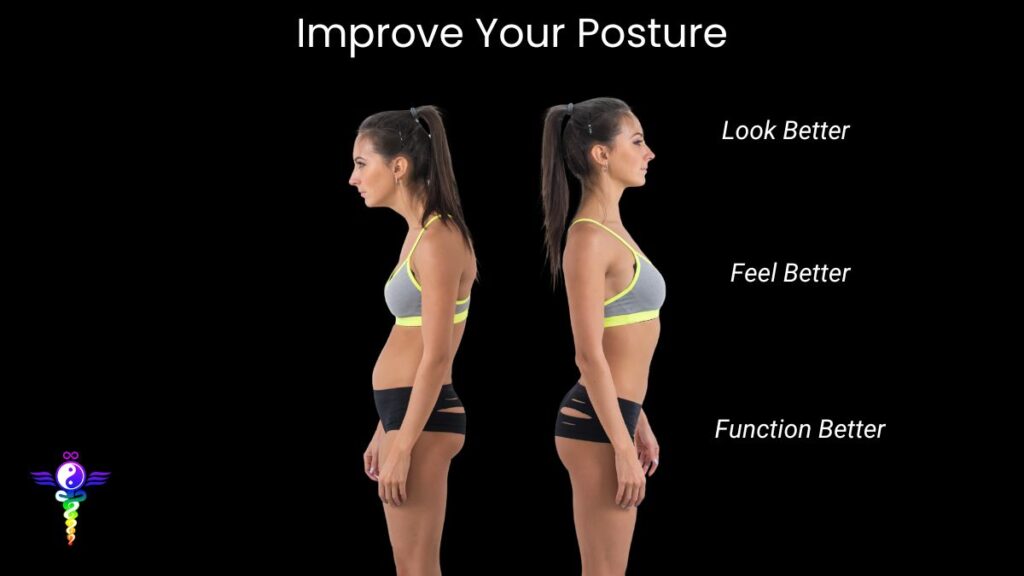
Your neck’s sore, and your back’s killing you. You’re pretty sure your posture’s off, but what are you actually doing about it?
Most people blame “bad posture” for their nagging neck, shoulder, or back pain. They rush out and buy a new mattress, fancy ergonomic chairs, or try pulling their shoulders back. The trouble is, most of those quick solutions don’t stick. That’s because posture itself is a symptom. Your posture shows everything that’s happening in your body and life: your daily habits, old injuries, stress levels, emotions, even the way you breathe and think.
Daily Habits Are Slowly Wrecking You

Your body is brilliant at adapting, but it adapts to whatever you do most often – good or bad. Sit at a desk for hours every day with rounded shoulders and a forward head? Your body thinks that’s normal and starts shortening the front muscles (like pecs and hip flexors) while lengthening and weakening the back ones (like mid-back extensors and glutes). Phone scrolling with your chin tucked? That reinforces forward head posture even more. Driving with one hand on the wheel or lifting kids awkwardly? These repetitive patterns create tiny imbalances that stack up over time.
In the CHEK world, movement is one of the 6 Foundation Principles. We look at it through Primal Pattern movements, which include squatting, lunging, bending, twisting, pushing, pulling, and walking (gait). When daily habits throw these patterns off, for example, if you rarely squat properly because you sit all day, your body loses efficient and balanced movement. Weak glutes from constant sitting mean your lower back has to pick up the slack during bends or lifts. Tight hip flexors tip the pelvis forward and alter the curves in your spine. Over months or years, these habits create structural changes such as poor alignment, reduced core stability, and eventually pain that won’t go away with quick fixes.
Past Injuries Leave a Trail
Old injuries don’t just disappear when the pain fades. Your body remembers them and builds workarounds that stick around for years. A twisted ankle from a sports game or a slip years back? You start limping slightly, even if you don’t notice it anymore. That shifts your weight unevenly through the hips and pelvis. One side compensates more than the other, the spine gets pulled out of line bit by bit, and before long, your low back or neck starts complaining. The same goes for a shoulder that popped out once or a whiplash from a car bump. You subconsciously guard that area, rounding your shoulders forward to protect it. Over time, the chest tightens, the upper back weakens, and neck or mid-back pain becomes the new normal.
These compensations change how you move every day. Squats, bends, or even walking turn into uneven patterns. Glutes on one side shut down, hip flexors on the other shorten more, and core stability suffers because the foundation isn’t balanced. When past injuries disrupt those patterns, your body loses efficiency. Pain shows up as a warning that something deeper needs fixing, not just icing or popping painkillers.
The longer these patterns go unaddressed, the more they entrench. What started as a one-off injury becomes part of your daily posture and movement habits. That’s why quick fixes rarely cut it – they treat the symptom but ignore the chain reaction from the past.
Don't Build on a Shaky Foundation
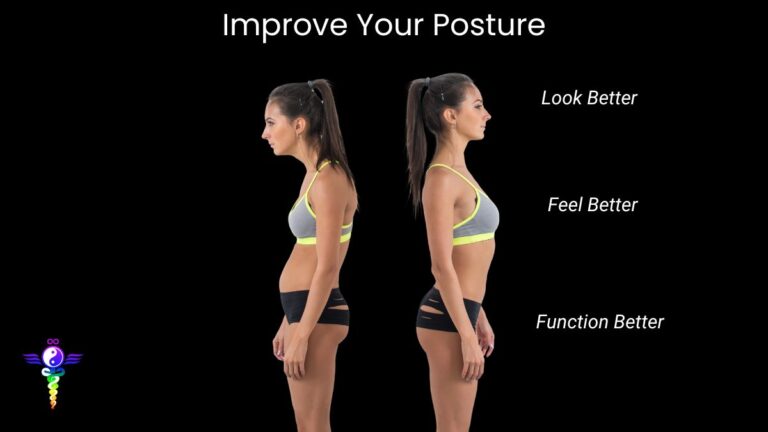
Plenty of people ignore the warning signs and jump straight into running, gym sessions, or sports with the posture they’ve got – forward head, anterior pelvic tilt, weak glutes, collapsed core. They think “just keep moving” or “push through” will sort it. It doesn’t. It makes things worse.
Your body needs a solid foundation before you add load, speed, or impact. Posture is the starting position for every move. If you’re running with forward head posture or an anterior pelvic tilt, your core can’t brace properly, glutes don’t fire right, and force gets dumped into joints and tissues that aren’t designed to take it alone.
If you’re running or doing sports under those conditions, your efficiency tanks. You waste energy compensating instead of propelling forward. Breathing gets shallower because the diaphragm is restricted, core stability drops, and fatigue hits faster. Over time, that repeated stress under load ramps up injury risk – shin splints, knee pain, IT band issues, low back strain, even shoulder or neck problems from the upper body compensating for the lower.
The fix isn’t more miles or harder sessions. It’s building the foundation strong enough to handle load without breaking down. That means targeted corrective exercise to rebalance muscles, restore proper alignment, retrain breathing and core function, and reprogramming clean Primal Patterns before you layer on running or sport-specific work. Massage/bodywork helps release the tight spots holding poor patterns in place. Once the base is solid, performance improves naturally – better stride, less fatigue, lower risk of injury.
If you’re one of those people grinding through runs or workouts feeling beat up or off-balance, stop guessing. Assess what’s really going on so you can load safely and get results that last.
Emotions Shape Your Posture More Than You Think
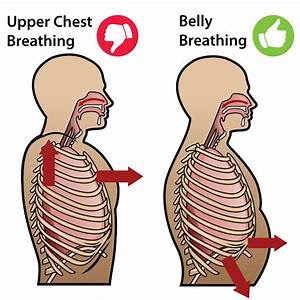
Your posture isn’t purely mechanical. How you think and feel plays a massive role too. Chronic stress, worry, or unresolved tension fires up your sympathetic nervous system, sending you into fight-or-flight mode. You start breathing shallowly into your chest instead of deeply into your belly. Shoulders hike up, traps tighten, pecs shorten, and you end up with that classic forward slump or rounded upper back. Your thoughts drive your emotions, and those emotions drive physical holding patterns in the body.
Breathing ties it all together as another key Foundation Principle. Proper diaphragmatic breathing (belly expands on inhale, ribs widen gently) is essential for core stability and posture. The diaphragm isn’t just for air; it’s a primary stabiliser that connects to your spine, ribs, and pelvis. When stress makes you chest-breathe or mouth-breathe, the diaphragm weakens, intra-abdominal pressure drops, and core control suffers. Posture collapses because the deep stabilisers aren’t firing right. This creates a vicious cycle: poor posture restricts breathing, shallow breathing ramps up stress, and the whole thing feeds forward head, tight hips, and pain.
Why Proper Assessment Beats Guessing Every Time
You need a proper assessment to see the full picture. Guessing with random stretches, gadgets, or chasing the sore spot rarely fixes anything long-term.
The site of your pain is rarely the root of the problem. Your body is smart – it sends pain to the area that’s overloaded or compensating for weakness, tightness, or imbalance somewhere else. That low back ache might stem from weak glutes, a funky ankle from years ago, or poor breathing mechanics upstream. Neck pain often screams from forward head habits or shallow chest breathing. Chasing the pain spot with generic stretches or rubs might give temporary relief, but until you find and fix the true source, it keeps coming back.
At Re-activ8, I assess thoroughly to map what’s really going on. This includes:
- Postural grid photos and analysis (static alignment, asymmetries, forward head, pelvic tilt).
- Functional movement screens (Primal Pattern testing: squat, lunge, bend, twist, push, pull, gait – spotting compensations under basic load).
- Breathing assessment (diaphragm vs accessory/chest breathing – key for core stability and posture).
- Detailed history taking (past injuries, stress levels, sleep quality, nutrition, daily routine, habits).
- Palpation and muscle length/tension testing (finding tight/overactive, weak/inhibited areas, fascial restrictions).
This gives a clear map – no guesswork. We see exactly what’s tight, weak, inhibited, or overactive, and how it all chains together across the 6 Foundations.
Once we know the root cause, the plan is targeted and systematic:
- Corrective Exercise – Specific, phased exercises to restore function. Not endless planks or rows. We retrain Primal Patterns, improve breathing mechanics, release tight fascial lines, and strengthen weak links. Done right, posture improves naturally because the body no longer needs to compensate.
- Massage Therapy / Bodywork – Releases myofascial restrictions, scar tissue, and trigger points that exercise alone can’t reach. Deep tissue, Muscle Energy Technique (MET), and positional release work particularly well for postural holding patterns and speeding up progress.
- Lifestyle Tweaks – Ergonomic adjustments at your desk, daily breathwork drills, hydration reminders, simple stress tools – all tied back to the 6 Foundations for sustainable change.
In my rehab work, we focus on this mechanical and functional side – retraining breathing, releasing tight patterns, rebuilding core stability, and getting you moving better under load. Clients who follow through usually see real shifts in 6–12 weeks: less pain, smoother movement, more energy, and confidence to return to running, sports, or daily life without breakdowns. It’s not magic; it’s systematic root-cause work.
For deeper emotional or thinking-related layers (long-held stress, trauma showing up as body patterns), that’s where my signature Kre8 Health programme digs deeper.
Ready to Stop Guessing?
If you’re tired of temporary relief that never lasts and ready to find out what’s actually driving your posture issues and pain, let’s stop guessing and assess it properly.
Book an in-person or online Injury Rehabilitation session here.
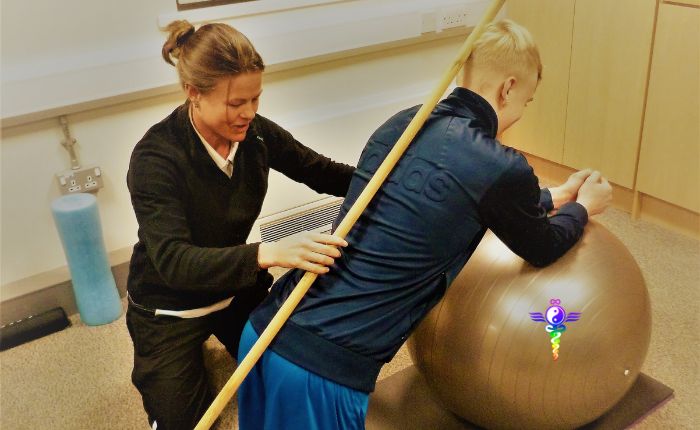
We’ll map your posture with grid analysis, screen your Primal Pattern movements, check breathing mechanics, review your history, and test muscle patterns. From there, we build a clear, targeted plan that hits the root causes – not just masks the symptoms. Whether it’s corrective exercise, targeted massage/bodywork, or simple lifestyle tweaks tied to the 6 Foundations, you’ll get what actually works for your body.
See you in the clinic or over Zoom. Let’s get you moving better, feeling better, and looking better!